

Jack Browne, Wichita Falls Times Record News
Sunday, August 16, 2026
After 1,000 years, the Holy Roman Empire quietly came to its official end on Aug. 6, 1806, as Emperor Francis II of Austria laid down his imperial crown following Napoleon’s three successive military victories.
Management lessons don’t always come from business books or leadership seminars.
Sometimes they come from 2,000 years ago, carved into stone, flowing through aqueducts, or buried beneath the streets of Rome.
The Roman Empire didn’t thrive because of inspiration alone — it thrived because of systems, discipline, and a relentless focus on execution.
And today’s managers, especially those leading lean teams, can learn a lot from how Rome got things done.
Take Rome’s gravity‑fed sewer system, the Cloaca Maxima. It wasn’t glamorous. It wasn’t celebrated. But it worked because thousands of workers handled the unglamorous tasks that kept the city functioning.
That’s delegation at its purest form. Modern managers often hand off a tedious assignment and say, “You can get this done today, right?”
Rome reminds us that delegation requires clarity, support, and accountability — not wishful thinking. The sewer flowed downhill because every worker knew exactly what “done” meant.
Roman legions offer another insight: discipline through defined roles.
Every soldier — from centurion to scout — knew their responsibilities. Ambiguity was dangerous.
Today, ambiguity still kills execution. When three team members assume “someone else” owns customer onboarding, the result mirrors a legion without formation: confusion, delay, and frustration.
Rome teaches us that clarity is kindness.
Then there’s infrastructure. Rome built roads before monuments.
They invested in what made everything else possible. In today’s world, leaders chase flashy AI initiatives while ignoring broken workflows.
But success still depends on the basics — clean data, clear communication, and predictable handoffs. Build your “roads” first.
Measurement mattered too. Rome’s census wasn’t just counting people; it was the backbone of resource allocation.
Today, managers who skip metrics end up managing opinions instead of reality. Rome understood that you can’t improve what you don’t measure.
Just the fact that something is measured tells the organization it’s important!
And while Rome celebrated heroic generals, its greatest achievements came from systems that didn’t require heroics. Aqueducts delivered water continuously without human intervention.
Modern teams often celebrate all‑nighters instead of asking why the system failed in the first place. Rome’s lesson: build processes that prevent emergencies.
The time for a postmortem is after the crisis, before celebrating those who careen from disaster to disaster.
Transparency mattered in the Roman Forum, where laws and debates were public.
Today, employees deserve the same clarity — especially during reorganizations or strategic shifts. Silence breeds anxiety; transparency builds trust.
Sharing the path forward, detailing the next several steps — and consequences as others react — builds consensus and keeps the team engaged and moving forward with confidence while minimizing dissent.
If some just can’t get on board, perhaps it’s time they leave, rather than slow the team by sharing dissent or lackadaisical work habits.
Similarly, those closest to the problem — keeping the sewers flowing — often know the bottlenecks better than those viewing from afar.
Finally, Rome’s stability during the Pax Romana created space for innovation.
Teams today need the same stability — predictable rhythms, clear priorities, and confidence that the ground won’t shift beneath them every quarter.
Celebrate creativity that refreshes the culture with new ideas, dreams and goals. Growth nourishes the souls of all.
Rome wasn’t perfect. But its management principles — delegation, clarity, measurement, systems, transparency, and stability — still apply. Nor was Rome built in a day, but every day should make progress forward on the plan.
The empire reminds us that great teams aren’t built on inspiration alone.
They’re built on structure, trust, and the willingness to handle the unglamorous work that keeps everything flowing.
So, when your boss asks, “Can you get it done today?” celebrate the opportunity to excel and lean into the job.
By the way, the Cloaca Maxima started around 600 BCE, is still in use today functioning as part of Rome’s drainage infrastructure carrying rainwater and runoff into the Tiber River.
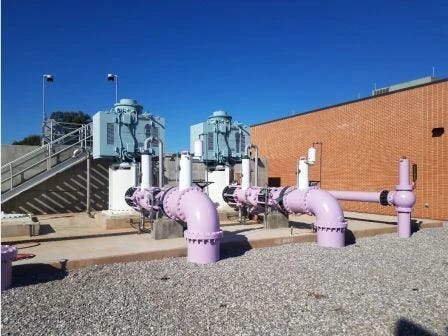
Systems beget longevity, enabling tomorrow’s choices and actions.
Jack Browne is a community activist and former technology executive who believes in the power of connection, service, and lifelong learning.