

One Riot, One Ranger - #178
Jack Browne, Wichita Falls Times Record News
Sunday, September 13, 2026
In 1823, when Stephen F. Austin established his colony in Mexican Texas, there was no large police force, standing army, or sprawling bureaucracy waiting to solve problems.
Instead, Austin hired ten experienced frontiersmen as Rangers to protect settlers and patrol a vast frontier. Those ten men became the foundation of the Texas Rangers. Their mission was simple: solve problems, protect people, and keep moving forward.
Years later, the phrase — “One riot, one Ranger” — captured that same spirit. Whether legend or history, the message remains powerful: capable people, empowered to act and held accountable for results, often accomplish more than others expect.
That idea came to mind during Winter Storm Uri in 2021. Texans endured one of the greatest infrastructure challenges in state history. Yet amid the hardships came stories of neighbors opening homes, sharing food, checking on seniors, and helping those in need.
Just as important, the crisis became a catalyst for improvement. Weatherization standards increased. Coordination between electric generators and natural gas suppliers improved. Greater attention was given to fuel availability during extreme conditions.
Like the Rangers of old, Texans learned and adapted.
That same spirit helps explain why the Electric Reliability Council of Texas continues to perform better than many critics acknowledge as Texas faces unprecedented growth.
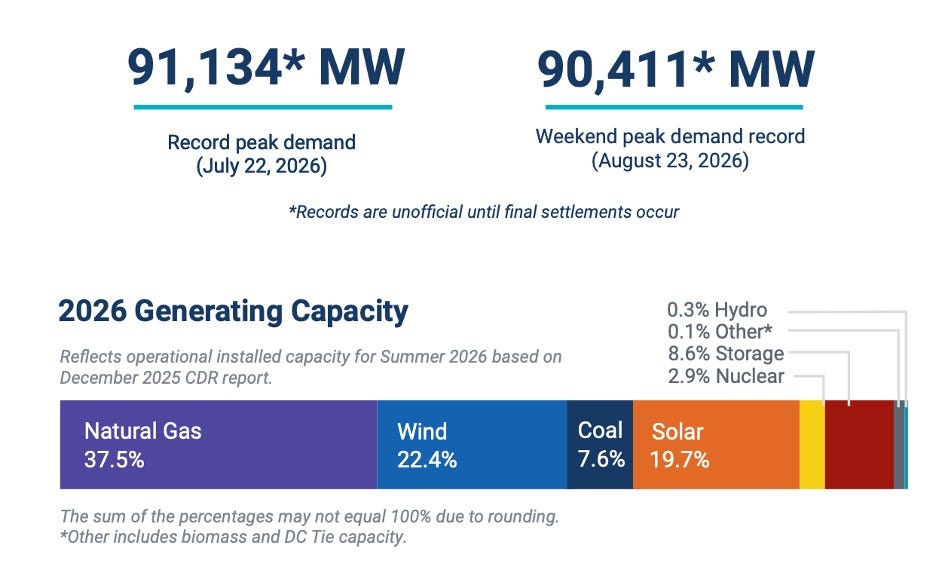
Approximately 1,000 people move to Texas every day. At the same time, artificial intelligence, advanced manufacturing, electrification, and large-scale data centers are driving electricity demand to new levels.
Can the grid keep up?
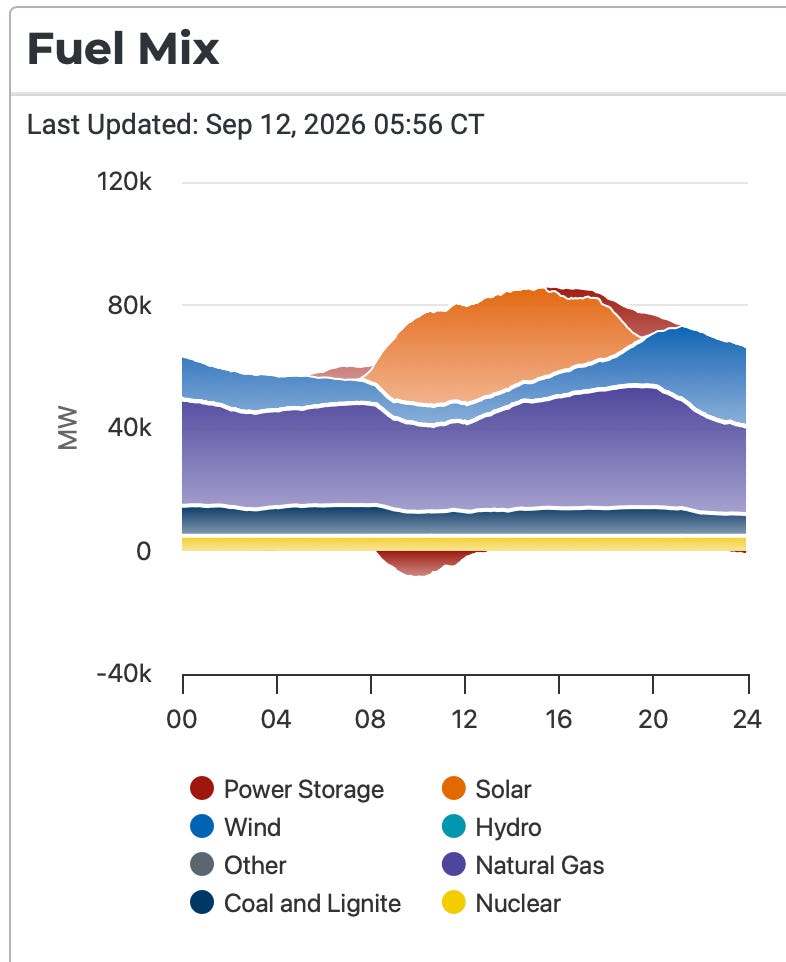
So far, the answer is yes.
Unlike many regions that operate capacity markets, ERCOT’s energy-only market rewards investment and performance when electricity is actually needed. More importantly, the system has demonstrated a capacity to evolve.
Uri improved fuel assurance and operational coordination. Then, in February 2024, the Smokehouse Creek Fire became the largest wildfire in Texas history, reminding planners and operators of the importance of resilient infrastructure and multiple transmission pathways. Reliability, once again, proved to be a journey rather than a destination.
The grid of the future is already taking shape.
Utility-scale battery storage can respond almost instantly when conditions change, helping stabilize the grid during peak demand and unexpected outages. What seemed experimental a decade ago has become an essential reliability tool.
Transmission technology is advancing as well. New 735-kV transmission systems can move significantly more power than traditional 345-kV systems while requiring less right-of-way per unit of capacity. For Texas, that means more electricity delivered efficiently while preserving valuable land resources.
Data centers deserve a balanced discussion too.
Many people assume they consume excessive water and create constant noise. In reality, many modern facilities employ closed-loop cooling systems that recycle water rather than continuously drawing fresh supplies. Noise is frequently managed through local agreements that limit sound levels to about 65 decibels during the day and 55 at night, roughly the difference between conversation in a busy office and the background sound of a quiet neighborhood.
Growth and quality of life do not have to be opposing goals.
The larger lesson extends beyond electricity.
From Stephen F. Austin’s original ten Rangers to today’s engineers, operators, linemen, and planners, Texas has succeeded by combining accountability with innovation. The state continues adding people, businesses, generation resources, batteries, transmission capacity, and new technologies. Yet reliability remains the objective.
No electric system is perfect. Every grid faces extreme weather, unexpected events, and unforeseen challenges.
What matters is the ability to learn, adapt, and improve.
That has always been the Texas way.
As the population grows and electricity demand rises, Texas continues demonstrating that economic expansion and reliability can coexist. The foundation is not merely technology. It is a culture that values resilience, responsibility, and problem-solving.
The old saying still fits.
Texas has never been defined by the size of the challenge. It has been defined by its response.
One riot, one Ranger.
In many ways, that is ERCOT’s story as well.
Jack Browne is a community activist and former technology executive who believes in the power of connection, service, and lifelong learning.