

Jack Browne, Wichita Falls Times Record News edition, Sunday, March 22, 2026
Empathy doesn’t arrive fully formed. It is not a switch that flips the moment we decide to be better people, better leaders, or better partners.
It develops the way most meaningful skills do: slowly, unevenly, and often after we have made a few uncomfortable mistakes. Awareness of others is not something we inherit. It is something we practice.
Most of us begin by seeing the world through a single lens: our own.
Early on, we are transactionally focused. What do I gain? What do I risk? What do I expect in return? If the benefit is unclear, we quietly disregard the person, the conversation, or the experience.
Then life intervenes. Sometimes gently. Sometimes with force. A difficult conversation. A lost deal. A relationship that doesn’t unfold the way we imagined. A moment when we realize we were hearing the words but not listening for the meaning.
Those moments are turning points. They shift us from self-focus to other focus, from certainty to curiosity. They introduce the realization that everyone around us carries information we do not yet have.
Greek philosopher Plutarch captured this simply: “Know how to listen and you will profit even from those who talk badly.”
Listening to imperfect communicators teaches us patience, humility, and discernment. It sharpens our ability to understand intent beneath execution.
In professional environments, this kind of listening changes everything. It creates cultures where people feel respected — not managed. Ideas surface earlier. Creativity improves. Innovation becomes a shared responsibility rather than a top-down exercise. Leaders who listen build trust, and trust compounds.
In personal relationships, listening acts as a stabilizer. When we listen to understand rather than to respond, defensiveness drops. Conversations lengthen. Conflict softens. Connection deepens. Emotional safety is not declared; it is demonstrated through attention.
The challenge, of course, is that listening well is harder than ever.
Digital communication strips away tone, expression, and context. Active listening requires effort. It asks us to slow down, notice patterns, and remember what was said without rushing to solve it.
Empathy begins the moment we stop assuming our experience is universal. It grows when we acknowledge that everyone carries a story we cannot see. It matures when we allow another perspective to exist without trying to fix, judge, or compare it to our own.
This is not just emotional intelligence. It is relational intelligence. It affects who we hire, who we follow, who we partner with, and how effectively we solve meaningful problems together.
Choosing the right partner is not about checking boxes. It is about fully seeing another person. Understanding how they navigate the world. What energizes them. What exhausts them. What patterns they repeat under pressure.
Empathy is the bridge that allows two people to meet in the middle without losing themselves. It keeps us from falling in love with potential while ignoring reality.
Awareness helps us choose wisely, whether selecting a partner or emulating a leader. It teaches us to pay attention to behavior, not just words. How do they treat people who offer no advantage? How do they respond to disappointment? Do they listen to understand, or listen to win?
These are not small observations. They are foundational signals.
Empathy does not just help us choose relationships. It helps us sustain them. It softens reactions. It creates space between stimulus and response. It reframes relationships as collaborations rather than competitions.
When empathy is present, conflict becomes a conversation. When it is absent, conversation becomes conflict.
Ironically, empathy grows fastest when we turn inward. When we recognize our blind spots. When we admit we do not always get it right. Humility creates room for connection.
In a world that rewards speed, empathy asks us to pause. In a culture that celebrates independence, awareness asks us to pay attention.
And in an era where technology can imitate almost anything, genuine human understanding remains irreplaceable.
So here is the invitation. Practice seeing people clearly. Practice listening without rehearsing your reply. Practice noticing the moments others overlook.
These practices will not make you perfect. They will, however, make you present. Over time, presence becomes consistency, and consistency becomes the quiet signal others come to trust most.
The right people will not just appreciate that effort. They will meet you there.
Because empathy is not only how we understand others. It is how we recognize those who understand us over the long run.
Jack Browne is a community activist and former technology executive who believes in the power of connection and service.
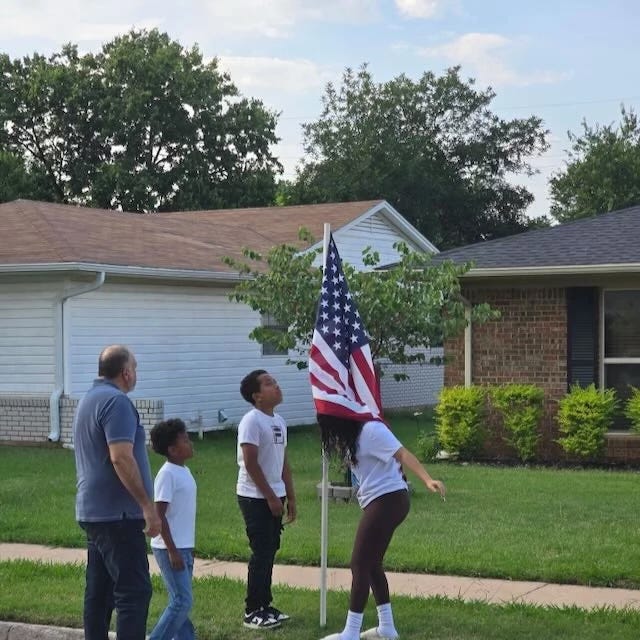
Photo Caption: Empathy grows when working on problems that help others grow. Southwest Rotary Club of Wichita Falls partners with Road to College to sell flag subscriptions that fund grants for organizations, and Road to College inspires students to lead, serve and attend college. Flag subscriptions are available at https://southwestrotary.com/page/flag-program-sw-rotary-of-wichita-falls