

Jack Browne, Wichita Falls Times Record News
Sunday, April 5, 2026
There are moments when a single sentence reframes decades of experience.
Late in 2024 I heard John Sharp, then Chancellor of Texas A&M University, say “Everything in the world was produced by God or an engineer.”
That idea has stayed with me because it captures the intersection of belief, discipline, and human effort as well as my life’s work.
Educated as an engineer, I spent my career in semiconductor chips, an industry built on learning curves and relentless improvement.
Every time cumulative shipment volume doubles, costs reliably drop by roughly thirty percent. Two such cycles turn a one-dollar product into fifty cents. With volume increasing across expanding markets, products that once seemed expensive became commonplace.
Volume rewarded learning, and learning rewarded discipline. Over fifty years, the growth of the semiconductor industry rivaled some of the world’s largest enterprises. Chips are everywhere today.
Today artificial intelligence is driving a new surge, with expectations that the market could double again in a couple of years. Growth on that scale does not happen by accident.
The real challenge is creativity, execution, and process. Factories must be filled. Yields must improve. Quality must remain high. Products must arrive on time.
Sustained success depends on renewal and new markets, often requiring that half of revenue comes from products less than three years old. Standing still is not an option.
That same dynamic applies far beyond technology. Businesses, nonprofits, and individuals face the identical requirement for renewal and market expansion.
Without long range thinking and continuous learning, yesterday’s strengths become today’s constraints. Too often mediocrity becomes the default.
Rarely does anyone choose it explicitly. Comfort replaces curiosity. Stability starts to feel like success. Learning slows. Eventually good enough stops being a checkpoint and becomes the destination. Andy Grove, Intel co-founder, captured this threat in his book, “Only the Paranoid Survive.”
Excellence has always been rare because it demands intention. Evolution is unforgiving. Resources are limited. Competition is constant. You either adapt or fall behind. Learn or die is not a slogan. It is a description of how progress actually works.
Decades ago, Tom Peters and Robert Waterman captured this reality with their book, “In Search of Excellence,” emphasizing habits rather than hype. Listen to customers. Trust people closest to the work. Improve systems continuously. These principles were not trendy. They were disciplined.
Clayton Christensen later sharpened the point in his book. “The Innovator’s Dilemma.” Disruption does not arrive through incremental improvement. It appears as step change that is dramatically better, 10 times cheaper, or faster.
When it arrives, markets move quickly, and organizations rooted in legacy thinking struggle to respond. Thomas Friedman expanded the frame even further in “The World Is Flat.” Technology eliminated distance as protection. Geography no longer guarantees relevance. Work, ideas, and services can come from anywhere.
These books define today’s competitive reality for organizations and individuals because ambition is everywhere.
Much of the world is hungry for progress. In places where traditional systems fail, people improvise and adapt. Africa’s mobile banking revolution did not wait for brick buildings or established institutions. It emerged from necessity, cell phones, and creativity. Entire microeconomies formed because people refused to accept the limits placed in front of them enabling commerce via ubiquitous cell phones without local banks.
Momentum builds when progress is allowed. Data centers provide a modern example. During the domestic energy boom in the Permian Basin, natural gas production exceeded pipeline capacity and prices went negative. Waste became opportunity. Servers were placed near gas flaring sites, converting excess energy into computing power. Early designs were rough and inefficient, but engineers kept learning.
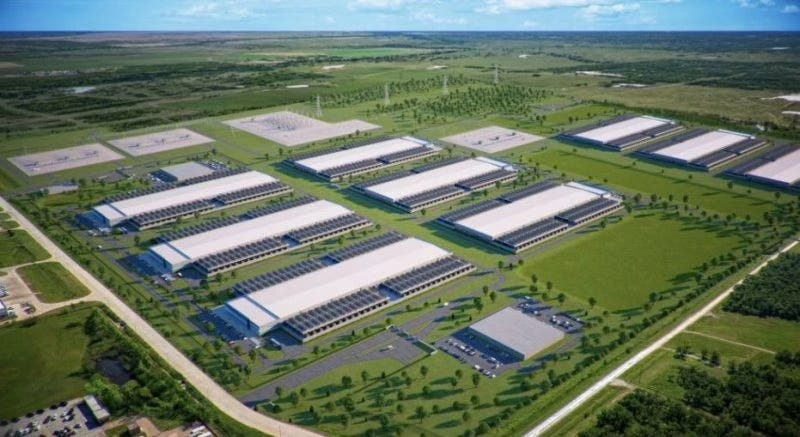
Today liquid cooling defines advanced facilities. The concept itself is not new. It existed decades ago. What changed was understanding. Improvements in materials, sensors, and controls transformed an old idea into something far more effective. Old becomes new again through learning — not nostalgia.
The lesson is uncomfortable. Standing still is not neutral. Stability without growth is erosion. Comfort carries a hidden cost.
Excellence requires modeling better behavior for those watching. Our children. Our coworkers. Our communities. It means staying curious when coasting feels easier. It means learning new skills even when old ones still work. Longevity is not the same as relevance.
Excellence does not announce itself. It is built quietly, choice by choice.
Over time, those choices compound into careers, organizations, and communities that remain useful, resilient, and worthy of trust.
Jack Browne is a community activist and former technology executive who believes in the power of connection, service, and lifelong learning.