

Jack Browne, Wichita Falls Times Record News
Sunday, October 11, 2026
Building more than tiny homes.
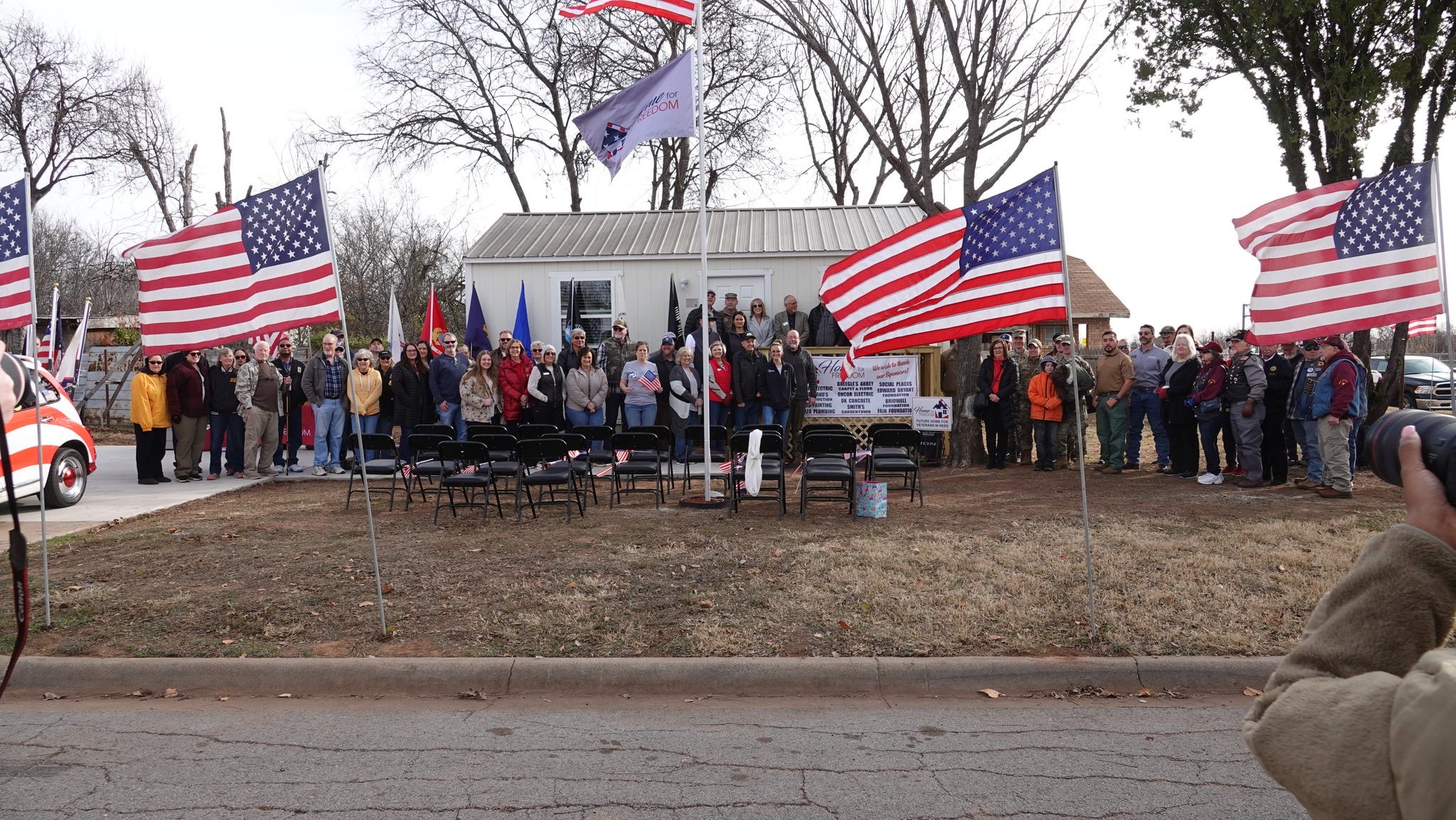
Recently, I attended a meeting of the Southwest Rotary Club of Wichita Falls and learned about the remarkable work being done by Home for Freedom, a local nonprofit dedicated to supporting veterans who have fallen into homelessness.
The organization exists on a simple but powerful belief: freedom is not free, and those who served our nation deserve dignity, support, and a path forward when they need it most.
As I listened to the presentation and later visited the site of two completed tiny homes, I realized this story is about much more than housing. It is about restoration. It is about community. Most importantly, it is about understanding the difference between simply acknowledging a problem and becoming personally involved in solving it.
Many community challenges attract a lot of involvement. People express concern, attend meetings, and discuss possible solutions. Those efforts matter. But meaningful change occurs when individuals and organizations demonstrate commitment through action.
That is exactly what I saw with Home for Freedom. Founded to honor and support veterans, the organization provides practical assistance and transitional housing opportunities for veterans seeking stability and independence.
The first two homes are modest in size, approximately 384 square feet. Yet standing inside, they feel much larger. A kitchen, living area, bedroom, bathroom, washer, dryer, furnishings, dishes, towels, and appliances transform a structure into a home.
Even more impressive is how the homes came together.
Donated materials, volunteer labor, community sponsors, furniture contributions, and professional services significantly reduced construction costs. Neighbors, businesses, civic leaders, and volunteers all contributed pieces of the solution. Nobody solved the problem alone. Everyone supplied part of the answer.
That observation reminded me of another lesson from both business and life.
Complex challenges rarely yield to individual effort. The best organizations succeed because they create ecosystems where people contribute according to their strengths. Some provide vision. Others contribute labor. Some offer funding. Others mentor, coach, encourage, and open doors.
The result becomes greater than the sum of the individual contributions.
The veterans entering this program are not simply handed a key and left on their own. They work with counselors and support organizations to obtain identification, access Veterans Administration benefits, apply for assistance programs, secure employment opportunities, and develop habits necessary for long-term success.
The goal is not permanent dependency. The goal is renewed independence.
That distinction matters.
The tiny homes are transitional housing. They provide a safe place to stabilize, regroup, and prepare for the next step. Residents contribute toward housing costs from available benefits or income, creating ownership in the process. The expectation is that each resident will eventually graduate into more permanent housing equipped with savings, transportation, income, and a renewed sense of self-sufficiency.
In many ways, the tiny home serves as a bridge.
Every successful career contains bridges. Every successful recovery contains bridges. Every successful life transition contains bridges.
Sometimes we need someone to believe in us until we can believe in ourselves.
As I looked around the property, I was struck by another thought. The homes themselves are not the real product. The real product is hope.
Hope is difficult to measure on a financial statement. It does not appear on a balance sheet. Yet hope often becomes the foundation upon which people rebuild their lives.
A roof provides shelter. A community provides belonging. Purpose provides direction.
Together, those three elements can change a life.
The Home for Freedom, community leaders, volunteers, and the City of Wichita Falls have demonstrated what happens when people move beyond discussing a problem and begin building solutions. Their efforts are creating opportunities for veterans who once found themselves without a place to call home
The lesson extends far beyond housing veterans.
Every community has unmet needs. Every organization faces challenges. Every family encounters seasons of uncertainty.
The question is not whether problems exist.
The question is whether we will simply observe them or commit ourselves to becoming part of the solution.
Sometimes changing a life starts with something as small as a tiny home.
And sometimes the smallest structures hold the biggest lessons.
To learn more or contribute, visit Home for Freedom at www.homeforfreedom.org. The organization is working to address veteran homelessness in our region by providing not only housing, but also the counseling, support services, and structure needed to help the 125 homeless veterans in our 5-county area rebuild independent and productive lives.
Jack Browne is a community activist and former technology executive who believes in the power of connection, service, and lifelong learning.